Author
Blinkstyle
Share
Southwest Florida’s waters are beautiful because of what lives in them, not just because of the view. Manatees move through Matanzas Pass and Estero Bay. Sea turtles nest on our beaches every summer. Seagrass beds under the surface quietly support the entire food chain that makes local fishing worth doing. Boating responsibly around all three is not complicated, but it does take knowing where to look and when to slow down.
Manatee Speed Zones Around Fort Myers Beach
Matanzas Pass, Estero Bay, and the waters around San Carlos Island are posted manatee protection zones, and portions are slow speed or idle speed year-round. These zones exist because manatee strikes are one of the leading causes of manatee mortality in Florida, and Lee County has some of the more heavily trafficked manatee habitat on the Gulf Coast.
The posted signs on the water are the actual legal boundary of each zone, and they can differ by season and by exact location, so the single most reliable habit is to slow down the moment you see a manatee zone sign and confirm the posted speed before continuing.
- Idle speed and slow speed, minimum wake zones are common through Matanzas Pass and Estero Bay
- Zones can be seasonal in some areas of Lee County, so the same stretch of water may carry a different speed limit in winter than in summer
- A manatee at the surface often shows only a small swirl or a single nose break, easy to miss if you are running fast
- If you strike or see an injured manatee, report it to the FWC Wildlife Alert line at 888-404-3922
Sea Turtle Nesting Season in Fort Myers Beach
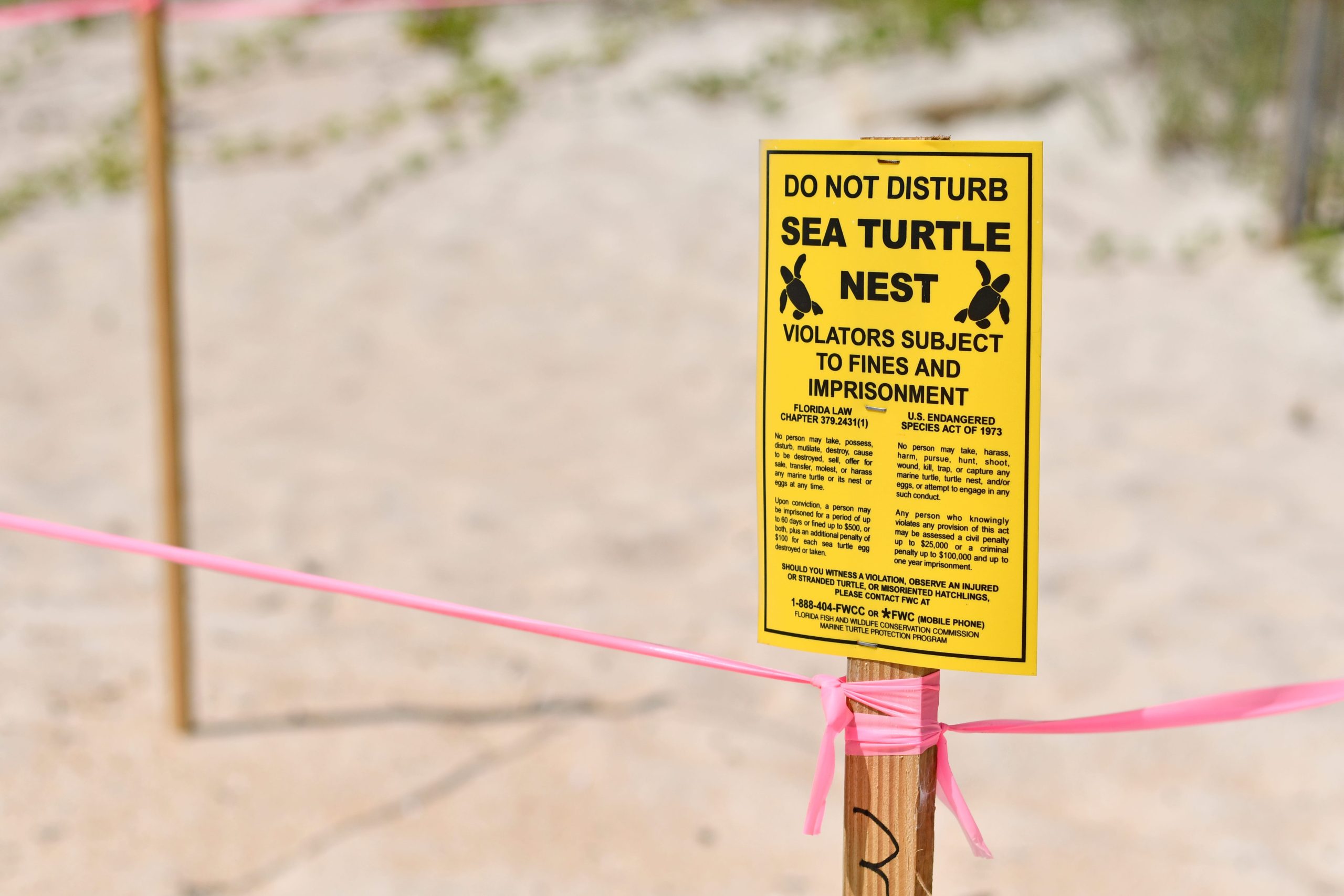
Florida’s sea turtle nesting season runs from May 1 through October 31, and Fort Myers Beach is active nesting habitat. Loggerheads are the most common nester on our beaches, with green sea turtles showing up as well. Nests are nearly invisible to an untrained eye, marked only by taped-off sections of sand and small signage placed by local monitoring groups.
On the water, the impact to boaters is mostly indirect, but it matters. Adult turtles feed and travel through nearshore Gulf waters all season, so the same slow, attentive habits that protect manatees protect turtles too, especially in the passes and nearshore flats where turtles come up to breathe.
- Keep boat lights turned down or shielded at night near the beach; artificial light can disorient nesting females and hatchlings
- Give a wide berth to any turtle you spot at the surface rather than approaching for a closer look
- Never approach or touch a marked nest if you come ashore on a nesting beach
- Pack out all fishing line, hooks, and plastic; entanglement and ingestion are leading causes of turtle injury
Seagrass-Safe Boating
The seagrass beds in Estero Bay, San Carlos Bay, and Pine Island Sound are the nursery for the redfish, snook, and trout that make this region great for fishing. They are also easy to damage and slow to recover. A single prop strike through a shallow grass flat can leave a scar that takes years to grow back.
The rule of thumb most local captains use is simple: if you can see the bottom clearly or the water color changes to a lighter, grassier tone, come off plane before you get there, not after you feel the prop hit.
- Stick to marked channels and stay off the flats when running at speed, especially on a falling tide
- If you run aground on grass, tilt or trim up and pole, paddle, or walk the boat off rather than powering through
- Watch your depth finder and trust it over a guess, especially in areas you have not run before
- Anchor on sand where possible instead of dropping directly into a grass bed
Responsible Boating in SWFL: A Quick Checklist Before You Untie
- Check current manatee zone boundaries and speed limits for the area you’re running through
- Keep an eye out at all times, not just in posted zones; wildlife moves outside the lines on a chart
- Idle down anywhere visibility into the water is limited by glare, chop, or low light
- Carry the phone number for FWC Wildlife Alert (888-404-3922) in case you need to report an injured animal
- Treat every trip through the pass or across the flats as if wildlife could be there, because it usually is
Frequently Asked Questions
What is the manatee speed limit near Gulf Star Marina?
Waters around Matanzas Pass and Estero Bay carry posted slow speed and idle speed manatee zones, with some areas seasonal. Always follow the speed posted on the signage in the water, since it reflects the current, legally enforceable limit for that exact stretch.
When is sea turtle nesting season in Fort Myers Beach?
Sea turtle nesting season in Florida runs May 1 through October 31. During this window, nests are present on local beaches and adult turtles are active in nearshore Gulf waters.
How do I avoid damaging seagrass while boating?
Stay in marked channels, avoid running at speed over visibly shallow or grassy water, and use a depth finder rather than guessing. If you do run aground on grass, lift the motor and pole or walk off instead of throttling through.
What should I do if I see an injured manatee or sea turtle?
Keep your distance, do not attempt to handle the animal, and call the FWC Wildlife Alert line at 888-404-3922 to report the location and condition.
Boat Responsibly, Boat Often
Gulf Star Marina is proud to call Matanzas Pass and Estero Bay home waters, and we’re happy to point resident captains toward current wildlife zone information any time you stop by. Call us at 239-463-9552 or visit gulfstarmarina.com to learn more about storage and access at 708 Fishermans Wharf, Fort Myers Beach.